
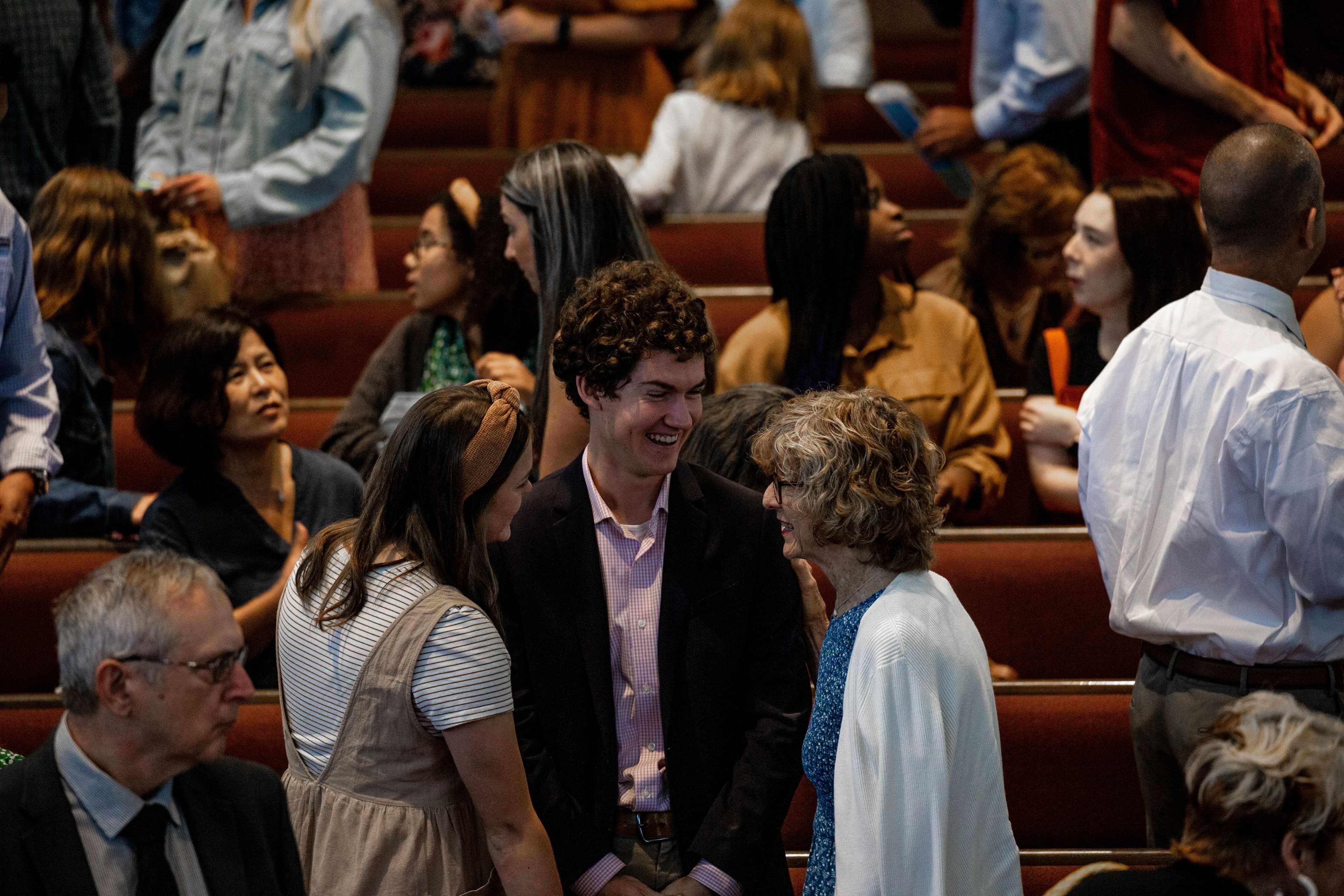
Everyone wants to belong somewhere. A new student walking into an unfamiliar campus, a young couple figuring out how to raise children, someone starting a new job where everyone else already knows the culture, an older adult wondering if they still have something to offer. All of them are asking some version of the same question. Do I fit here? Would anyone notice if I were gone? Scripture answers that question with a resounding yes, and it grounds that answer in something far sturdier than feelings. It grounds it in the design of God's family itself.
Saved For Something, Not Just From Something
One of the most overlooked truths of the gospel is that God did not only save people from sin. He saved them for something. Paul tells the Ephesians that believers "are no longer strangers and aliens, but fellow citizens with the saints and members of the household of God" (Ephesians 2:19). That word household matters. It is not corporate language. It is family language. A household implies belonging, shared life, and mutual care, not membership cards or spectator seats.
Paul develops this picture further in 1 Corinthians 12, describing the church as a body rather than a business or a club. "For as the body is one and has many members, and all the members of that one body, being many, are one body, so also is Christ" (1 Corinthians 12:12). Eyes, hands, feet, and every other part function differently, yet they depend on one another and honor one another. No part of a body exists as a customer of the rest. Every part exists as a contributing member of something alive.
That connectedness is not incidental to Christianity. It is essential to it. Romans 12:5 puts it simply: "So we, being many, are one body in Christ, and individually members of one another." The phrase "members of one another" is striking. It means a Christian's life is bound up with the lives of other believers in a way that cannot be reduced to isolated devotion. Faith was never meant to be only a private transaction between an individual and God. It was always meant to be lived inside a family.
You Matter More Than You Think
It is common, and understandable, for someone to wonder whether their presence actually changes anything. Paul confronts that thought directly. "If the foot should say, 'Because I am not a hand, I am not of the body,' is it therefore not of the body?" (1 Corinthians 12:15-16). The answer is no. Belonging to the body was never based on comparing yourself to someone else's role.
Just as importantly, Paul confronts the opposite error, the assumption that a person can go it alone. "The eye cannot say to the hand, 'I have no need of you'" (1 Corinthians 12:21). Ephesians 4:16 describes the whole body growing and building itself up in love only "when each part is working properly." Every generation has something to contribute. Younger believers need the steadiness of those who have walked with God longer, and those who are older need the energy and questions of those still finding their way. Paul modeled this himself, urging Timothy to take what he had learned and "entrust it to faithful men who will be able to teach others also" (2 Timothy 2:2), a chain of discipleship stretching across generations.
It is worth noticing how deliberate this design is. "God has placed the members, each one of them, in the body just as He pleased" (1 Corinthians 12:18). That is not an accident of biology or circumstance. Whatever abilities, opportunities, or influence a person has were placed there on purpose, and they exist so that person can encourage, teach, serve, or strengthen someone else.
A Place to Serve, Not Just a Seat to Fill
Belonging and mattering both lead somewhere. They lead to a place of service. "We are His workmanship, created in Christ Jesus for good works, which God prepared beforehand that we should walk in them" (Ephesians 2:10). Notice the progression there. God saved, God shaped, and God sends. Salvation was never meant to end in a comfortable seat. It was meant to begin a life of contribution.
That raises an honest question for anyone willing to sit with it. What would change if faith stopped being something practiced at the edges of a life and instead became the center of it? What would relationships look like, what would a calendar look like, what would forgiveness look like, if someone said with full sincerity, "My life belongs to Christ, fully and without reservation"? Paul's instruction in Colossians 3:23 cuts through the excuses: "Whatever you do, do it heartily, as to the Lord and not to men."
That kind of surrender is demanding, but it is also deeply fulfilling. A life of half measures rarely produces lasting peace. A life fully given to Christ produces purpose, deeper relationships, and a clear sense of direction, because it is no longer built on shifting circumstances but on a settled choice.
The Same Beginning for Everyone
However far along that journey someone is, every believer began the exact same way. "By one Spirit we were all baptized into one body, whether Jews or Greeks, whether slaves or free" (1 Corinthians 12:13). Confession of faith in Jesus, repentance from sin, and baptism into Christ mark the entry point into this family for every single person who belongs to it. There is no separate tier of belonging based on background, status, or how long someone has been a Christian.
One day, every earthly achievement will gather dust. Diplomas, careers, and trophies will not follow anyone into eternity. But there is another table, in a kingdom that does not end, where Christ himself has already made room. The invitation there is simple and unmistakable: "Well done, good and faithful servant... enter into the joy of your Lord" (Matthew 25:21). That invitation is what makes today's choice to belong, to matter, and to serve worth everything it costs.