
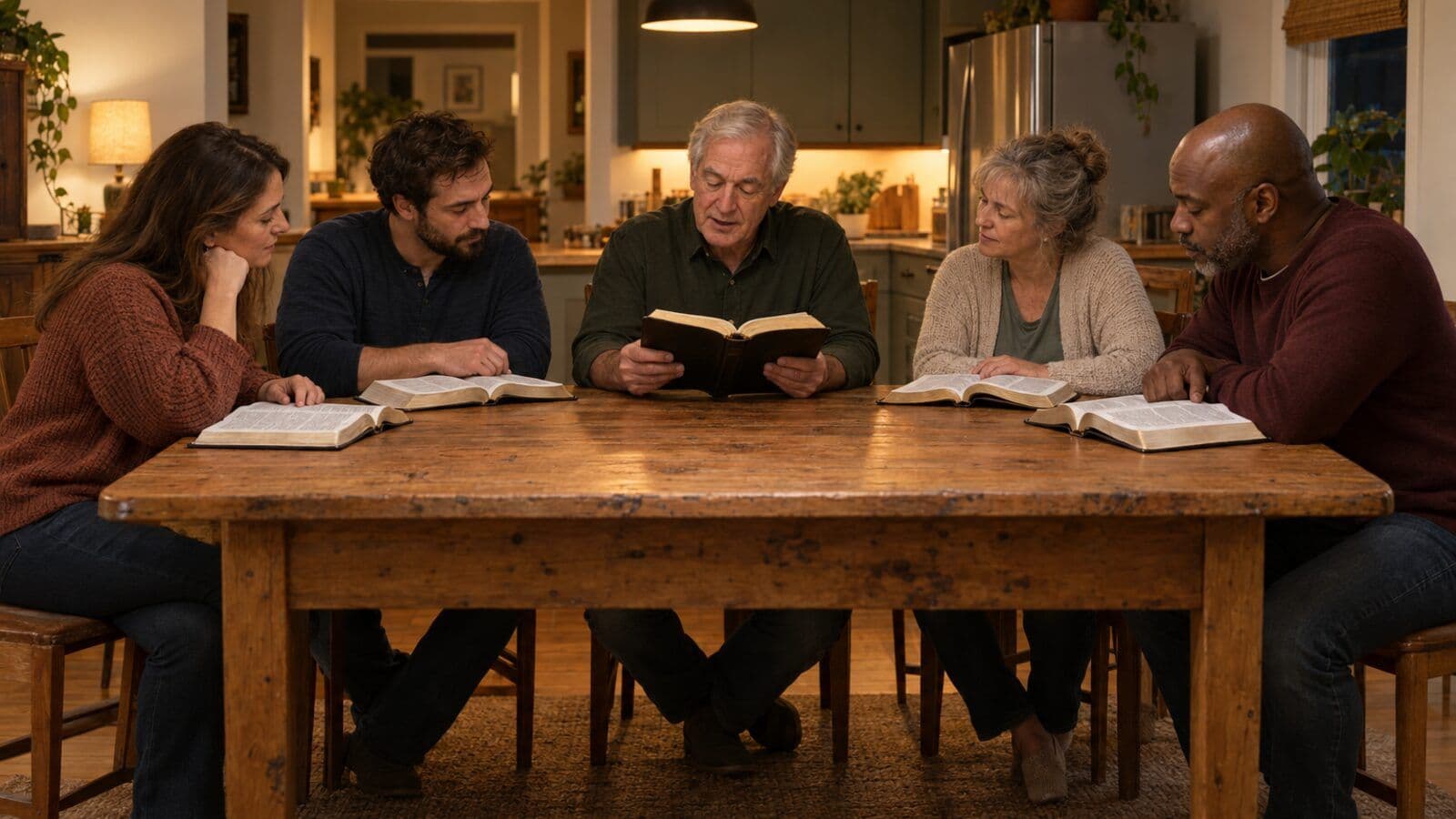
Jesus Christ founded His church. He promised, “I will build my church” (Matthew 16:18), and Scripture identifies Him as its head and Savior (Ephesians 1:22–23; 5:23). In Acts 2, the gospel was preached in Jerusalem; those who received it were baptized, and the Lord added the saved to His people (Acts 2:38–47). The church belongs to Christ because He established it, purchased it with His blood, and reigns over it as head (Acts 20:28; Colossians 1:18).
Where, then, does Alexander Campbell belong in the story?
It is a fair and important question. Campbell was an influential nineteenth-century preacher, and many American churches of Christ have historical ties to the movement he helped lead. That history should be acknowledged honestly. Yet helping lead a movement that sought to recover New Testament Christianity is not the same as founding Christ’s church or becoming its authority.
The History Matters—and We Should Tell It Honestly
During the early 1800s, several efforts arose to unite Christians by returning to Scripture rather than preserving divisions built around competing creeds. Barton W. Stone and Thomas and Alexander Campbell became prominent voices in those efforts.
In Kentucky, Stone and several fellow ministers dissolved the Springfield Presbytery in 1804. This was a governing body they had formed, not merely an organization they left. In their Last Will and Testament of the Springfield Presbytery, they rejected their own authority to make laws for the church, appealed to Scripture, and called believers to unity in Christ.
In western Pennsylvania, Thomas Campbell published his Declaration and Address in 1809. He appealed for Christian unity under the authority of Christ and His apostles and expressly denied that his proposals were meant to become another creed or standard for the church.
Thomas’s son Alexander became one of the movement’s best-known preachers and writers. In 1832, the Stone and Campbell movements began to unite. Their work became a major part of what historians now call the Restoration Movement or the Stone-Campbell Movement.
The movement’s later history also includes painful disagreements and divisions. Over time, three principal streams emerged: churches of Christ, Independent Christian Churches, and the Christian Church (Disciples of Christ). These differences developed gradually and involved worship, church organization, cooperation, and biblical interpretation; they did not result from one simple split on a single occasion.
We should neither hide nor minimize that history. Recognizing the people and movements that influenced a congregation is not the same as treating them as its religious authority.
Returning to Christ Is Not Founding His Church
When we say that Jesus founded the church, we are not claiming that our local congregation has existed in Temple Terrace since the first century. We mean that the church we seek to be part of originated with Christ—not with an American reformer or religious movement.
That distinction is essential.
In Acts 2, Peter proclaimed the crucified and risen Jesus as both Lord and Christ. When his hearers asked what they should do, he told them to repent and be baptized for the forgiveness of their sins (Acts 2:36–38). Those who received the message were baptized, about three thousand were added that day, and they continued in the apostles’ teaching, fellowship, the breaking of bread, and prayers (Acts 2:41–42).
They did not become members of a party built around Peter or any other preacher. They became disciples of Jesus Christ.
We believe people today can respond to that same gospel and belong to that same Lord. Jesus said that those who abide in His word are truly His disciples (John 8:31–32), and the apostles instructed believers to hold to the teaching they had received (2 Thessalonians 2:15; 2 Timothy 1:13). Our confidence does not rest on proving an uninterrupted institutional chain from Jerusalem to Temple Terrace. It rests on Christ’s continuing authority and the apostolic teaching preserved in Scripture, which equips God’s people for every good work (2 Timothy 3:16–17).
Jesus described the word of God as seed (Luke 8:11). That image explains our confidence: the gospel does not lose its life or power with the passing of time. God’s word “lives and abides forever” (1 Peter 1:23–25), and the gospel remains “the power of God for salvation to everyone who believes” (Romans 1:16). The message that brought people to Christ in the first century can still bring people to Him today.
The seed illustration, however, does not prove that every congregation claiming to follow the Bible is faithful to it. A name on a sign is not evidence by itself. Scripture must test every congregation’s teaching, worship, organization, and daily life—and we need that examination as much as anyone.
As Paul wrote, “For no one can lay a foundation other than that which is laid, which is Jesus Christ” (1 Corinthians 3:11). Our task is not to establish another foundation but to build faithfully on the one God has already laid.
We Follow Christ, Not Campbell
We can learn from Alexander Campbell, just as we can learn from other teachers. The decisive question is whether his conclusions determine what Christians must believe and practice.
They do not. Christ alone possesses that authority.
Paul confronted divided loyalties in Corinth by asking, “Is Christ divided? Was Paul crucified for you? Or were you baptized in the name of Paul?” (1 Corinthians 1:13). His questions turn our attention away from religious personalities and back to the One who was crucified for us.
For that reason, we do not call ourselves Campbellites. We belong to Christ. His disciples were called Christians (Acts 11:26), and those baptized into Christ have put on Christ and are one in Him (Galatians 3:27–28). No reformer, preacher, or institution occupies His place: Christ is the head of the church, the Savior of the body, and the One who purchased it with His blood (Ephesians 5:23; Colossians 1:18; Acts 20:28).
Campbell’s own positions are therefore not binding on us. He supported the American Christian Missionary Society, established in 1849, and served as its first president. At Temple Terrace, we understand the New Testament to entrust the church’s work to local congregations rather than to separate, church-supported missionary organizations. The Philippian congregation’s direct support of Paul provides one example of that pattern (Philippians 4:15–16).
This disagreement does not erase Campbell’s historical influence. It simply demonstrates the difference between appreciating a teacher’s contribution and accepting that teacher as the church’s authority.
The same standard must be applied to our preachers, our elders, and our own long-held assumptions. Like the Bereans, who examined the Scriptures to test what they heard, we must ask whether every teaching is truly supported by God’s word (Acts 17:11).
What This Means at Temple Terrace
These are the convictions of the Temple Terrace congregation. We do not presume to speak for every congregation that uses the name “church of Christ.”
Our congregation seeks to govern itself under Christ, with local shepherds overseeing its work. No denominational headquarters, convention, or central office determines our teaching or service, because all authority belongs to Christ (Matthew 28:18), and His word is the standard by which teaching must be tested (John 12:48; 1 Thessalonians 5:21). We understand local oversight to follow the New Testament pattern: elders were appointed in each congregation, and shepherds were charged to care for the flock among them without domineering over it (Acts 14:23; Acts 20:28; 1 Peter 5:1–3; Titus 1:5).
Congregational independence, however, does not automatically make a church faithful. Neither does a familiar name or respected history. We must continue listening to Christ, studying His word, loving one another, and correcting our course whenever Scripture shows that we have fallen short.
Our purpose is not to defend everything ever associated with a movement or to claim that our understanding is beyond examination. Our aim is to follow Jesus faithfully, submit every belief and practice to His word, and welcome honest questions along the way.
Come Study With Us
You do not need to understand the history of the Restoration Movement before visiting us. Bring your questions, open the Bible with us, and consider Jesus' teaching for yourself.
We are imperfect people who depend on God’s grace and desire to grow into Christ’s likeness (Ephesians 2:8–10; 2 Corinthians 3:18). It is to answer Christ’s gracious call, learn from Him, and discover the joy and responsibility of belonging to Him (Matthew 11:28–30; Romans 14:8; 1 Corinthians 6:19–20).
We meet at 8001 Temple Terrace Highway, Temple Terrace, Florida. After you enter the parking lot, turn right immediately; guest parking will be on your left. Greeters at the front doors will welcome you and help you find your way. Sunday morning worship generally lasts about 75 minutes.
Our Plan Your Visit page explains what to expect, and Path to Forgiveness & Hope introduces the Bible’s message about coming to Christ. You are also warmly welcome simply to come, worship with us, and meet us.
When we meet:
- Sunday: Worship 9am, Bible Class 5pm
- Wednesday: Bible Class 7pm