
For many of us, faith is closely connected to people we love—a parent who taught us to pray, a grandparent who opened the Bible with us, or a congregation that cared for our family. Those relationships matter, and conversations about differences between churches should honor them.
At the Temple Terrace church of Christ, we want to approach those conversations with kindness, honesty, and an open Bible. We recognize the sincere love for Jesus many Methodists express. We also understand that meaningful differences deserve thoughtful discussion, not criticism of one another’s motives.
The following explains some of those differences and the Scriptures that guide our convictions. Because Methodist denominations and individual congregations vary, the Methodist descriptions draw primarily on United Methodist teaching (https://www.umc.org/en/). Likewise, we are explaining the beliefs and practices of our congregation rather than claiming to speak for every church of Christ.
How Do We Look to Scripture for Guidance?
United Methodists affirm Scripture as the primary source and standard for Christian teaching. They also draw on the Wesleyan tradition, reason, and experience in interpreting the Bible, with documents such as the Articles of Religion and the Book of Discipline guiding the denomination’s teaching and life. It would not be fair to suggest that Methodists simply place these above Scripture. (United Methodist teaching on Scripture)
In churches of Christ like ours, we seek to make the Bible our only binding standard for faith and practice, without adopting a denominational creed or book of discipline. We want to belong to the church Jesus promised to build and to continue in the teaching of His apostles (Matthew 16:18; Acts 2:42). Scripture provides the instruction needed to serve God faithfully (2 Timothy 3:16–17).
That does not mean we assume every interpretation we hold is beyond question. We, too, can be influenced by familiar habits and inherited understandings. We value learning from others, while believing that every teaching and practice—including our own—must be examined in the light of God’s Word.
Our invitation is not simply, “Accept what we say,” but, “Let’s study what Scripture says together.”
How Is the Congregation Led?
United Methodist churches belong to a connectional structure in which congregations share in a wider network of ministry and accountability. Conferences bring church representatives together for decision-making, and bishops provide oversight and appoint pastors through a consultative process. (United Methodist church organization)
Our congregation is locally governed under the leadership of elders, also called shepherds, who meet the qualifications described in 1 Timothy 3:1–7 and Titus 1:5–9. We understand Peter’s instruction to “shepherd the flock of God that is among you” as describing responsibility for the local congregation (1 Peter 5:2). We therefore do not place our congregation under a regional bishop or denominational governing body.
For us, this is more than an organizational question. Shepherding means knowing people, praying with them, encouraging their growth, and helping them through difficult seasons. Our elders serve under Christ, whom we recognize as the head of the church (Ephesians 1:22–23).
How Do We Understand Baptism?
Baptism can be a particularly personal subject. Someone baptized as an infant may associate that occasion with the love and faith of parents or grandparents. We want to discuss it with sensitivity to those connections.
United Methodists baptize both infants and adults and recognize sprinkling, pouring, and immersion. They understand baptism as a sacrament—a means of God’s grace and entrance into the community of faith—not merely as an outward symbol. They also emphasize the importance of continuing to grow in faith after baptism. (United Methodist teaching on baptism)
Baptism follows a person’s faith in Jesus and repentance of sin. In Acts 8:12, those who believed Philip’s preaching were baptized. In Acts 2:38, Peter called his hearers to repent and be baptized for the forgiveness of their sins.
For that reason, we baptize by immersion those who personally believe in Christ and turn to Him in repentance. We understand baptism as the occasion when God washes away the penitent believer’s sins and unites that person with Christ in His death and resurrection (Acts 22:16; Romans 6:3–4).
We do not understand baptism as earning salvation. Rather, it is a response of faith to God’s grace, trusting in His power and promise, not in our own goodness (Ephesians 2:8–9; Colossians 2:12).
We recognize that these passages may raise questions. Those questions deserve patient study and a caring conversation.
Why Do We Sing Without Instruments?
Methodist worship takes several forms, including traditional and contemporary services, and commonly includes instrumental accompaniment. Congregational singing is also an important part of Methodist worship. (United Methodist music resources)
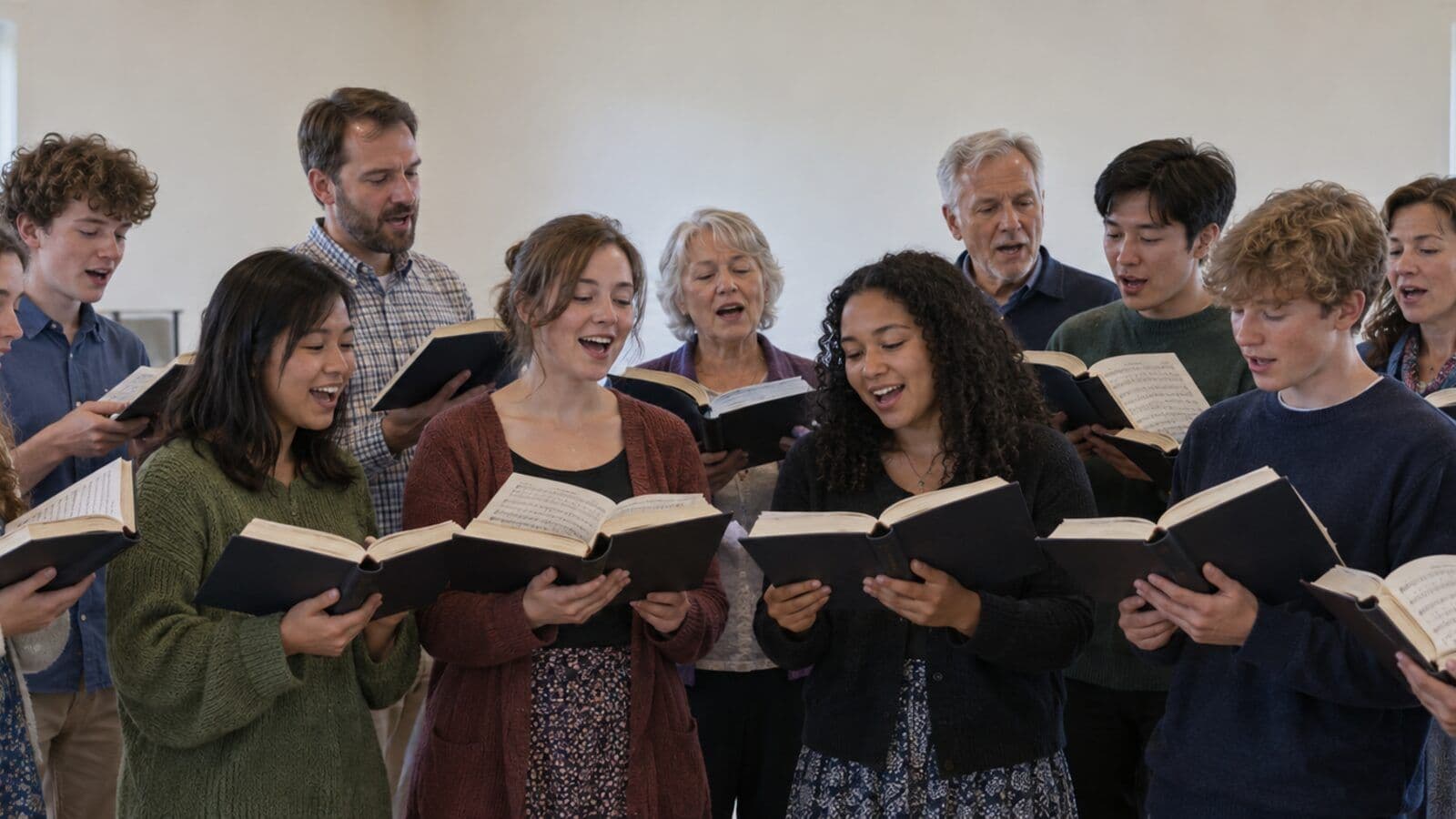
At Temple Terrace, we sing together without instruments. Our conviction grows from passages that instruct Christians to sing, teach, and encourage one another while making melody to the Lord in their hearts (Ephesians 5:19; Colossians 3:16). We understand these instructions as authorizing congregational singing without instrumental accompaniment. It reflects our desire to follow what we understand the New Testament to teach.
When you visit, you will hear the congregation joining in song. You do not need a trained voice to take part. The emphasis is on offering praise to God from the heart and encouraging one another through the words we sing.
How Often Do We Observe the Lord’s Supper?
Communion practices vary among Methodist congregations. Many observe it monthly, while official United Methodist guidance encourages weekly celebration. Weekly Communion, therefore, is not unique to churches of Christ. (United Methodist teaching on Communion)
We observe the Lord’s Supper every first day of the week. We understand the disciples’ gathering to break bread on the first day of the week in Acts 20:7 as a pattern for this weekly remembrance.
At the center of this practice is Jesus Himself. The bread and the cup remind us of His body and blood, His sacrifice for our sins, and the hope we have through Him. Each week, we pause together to remember His death and proclaim it until He comes (1 Corinthians 11:23–26).
An Invitation to Keep Studying
A comparison like this cannot answer every question, and we would not expect it to. Its purpose is to begin a conversation.
We encourage you to read the New Testament carefully, consider the passages mentioned here, and ask questions about anything that is unfamiliar. Please examine our teaching, too. The Bereans were commended for searching the Scriptures to see whether what they were being taught was true (Acts 17:11).
You do not have to dismiss the kindness of people who helped shape your faith in order to keep learning. Gratitude for those people and a willingness to examine Scripture can go together.
Our hope is that we will all grow in understanding, draw closer to Christ, and become more faithful to His Word.
You Are Welcome Here
Whether you have spent your life in a Methodist congregation, come from another church background, or are just beginning to explore faith, you are welcome at the Temple Terrace church of Christ.
You do not need to arrive with every question answered. We are imperfect people who need God’s grace, and we would be glad to listen, get to know you, and study the Bible with you.
You can plan your visit or explore what the Bible teaches about becoming a Christian.
When we meet:
- Sunday: Worship 9am, Bible Class 5pm
- Wednesday: Bible Class 7pm