
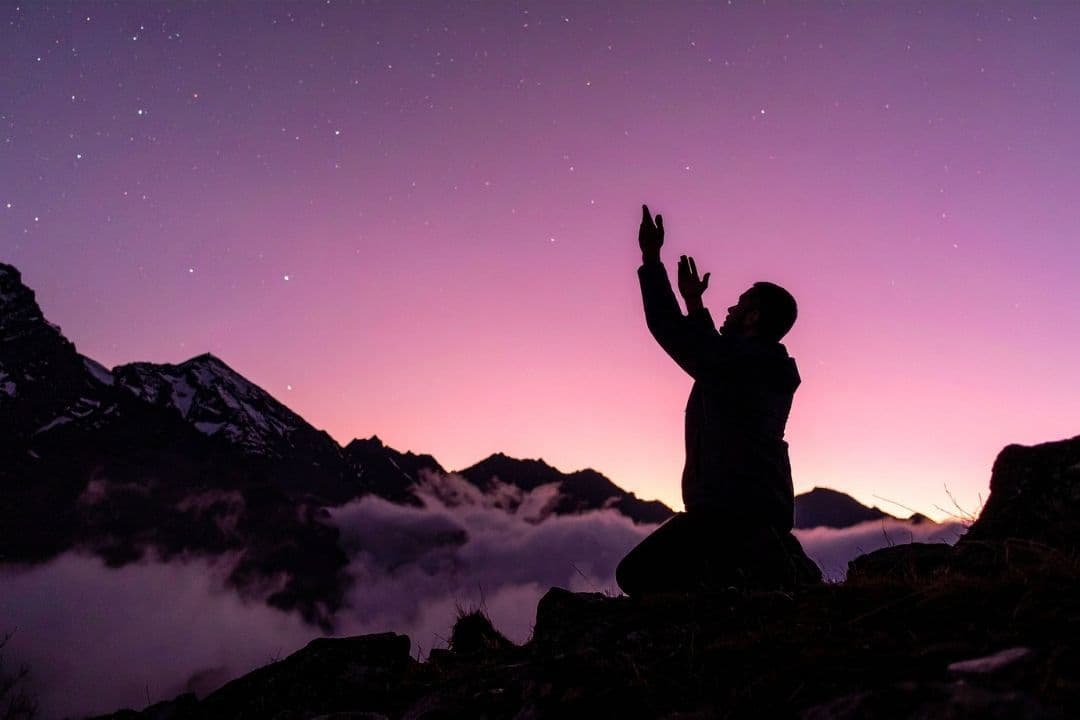
There are certain hours when fear feels louder than faith. The house is quiet, the lights are low, and sleep refuses to come. Problems that felt manageable during the day suddenly loom larger in the darkness. At moments like these—often around 3 a.m.—faith is tested in deeply personal ways.
Scripture understands this experience well. The Bible is filled with storm stories—moments when God’s people are overwhelmed, uncertain, and afraid. These stories are not included to impress us with miracles alone, but to teach us how faith responds when circumstances feel out of control.
When the Storm Comes Without Warning
In Matthew 8, the disciples find themselves caught in a violent storm on the Sea of Galilee. The waves rise suddenly. Water fills the boat. Panic sets in. Meanwhile, Jesus sleeps.
The contrast is striking. Experienced fishermen are terrified, while the One who commands creation rests calmly. Their fear leads to a piercing question: “Do you not care?” It’s a question that still echoes in human hearts today. When prayers seem unanswered and circumstances worsen, it’s tempting to wonder whether God sees, knows, or cares.
Jesus’ response reframes the moment. He does not deny the storm’s reality. Instead, He asks, “Why are you so afraid? Where is your faith?” Fear is understandable—but it is not meant to rule the believer’s heart.
The Storms That Keep Us Awake
Most of us will never battle a literal storm at sea, but we know the storms of life all too well. Family struggles keep us awake—worries about marriage, children, or aging parents. Financial pressure looms when jobs feel unstable or debt feels overwhelming. Health concerns bring fear through diagnoses, treatments, and unknown outcomes. Relationships strain under resentment, jealousy, or unresolved conflict.
These storms are real. They are not imagined. And Scripture does not minimize them. What it does challenge is the assumption that fear must dominate us.
Jesus taught repeatedly that worry cannot add a single hour to life (Matthew 6:27; Luke 12:25). Paul reminded believers that prayer and thanksgiving guard the heart with God’s peace (Philippians 4:6–7). Yet even knowing these truths, fear can still grip us at night. Faith, it turns out, is not about never feeling fear—it’s about knowing where to turn when fear comes.
A Different Storm, a Familiar Pattern
Jonah’s story presents another storm, but with a different cause. Jonah runs from God, choosing escape over obedience (1:1–3). A storm follows—not to destroy him, but to awaken him (1:4). While pagan sailors cry out to their gods and act urgently to save the ship, Jonah sleeps below deck (1:5–6).
This contrast is sobering. Faithlessness does not always look frantic; sometimes it looks passive. Yet even here, God does not abandon Jonah. The storm becomes a means of pursuit, not punishment.
Both Matthew 8 and Jonah 1 reveal a consistent truth: God steps into storms involving imperfect people. He does not wait for flawless faith or perfect obedience before acting.
How Faith Responds in the Storm
Scripture reveals three faithful responses when storms arise.
First, faith begins with prayer. Storms drive people instinctively to cry out. Prayer acknowledges what fear resists—that God is sovereign. Casting cares on Him is not denial; it is trust. Prayer does not always make the storm end immediately, but it reminds us who controls the wind and waves.
Second, faith does what it can. In Jonah’s storm, the sailors act—they lighten the ship while calling for help. Scripture consistently pairs God’s faithfulness with human responsibility. Faith is never passive. It asks God for help, then cooperates with His will. Prayer does not replace effort; it sanctifies it.
Third, faith trusts and obeys. Trust is not pretending the storm isn’t real. It is choosing to believe God is good even when circumstances are not. Obedience anchors faith to God’s character rather than the chaos of the moment.
Faith Is a Process, Not a Switch
One of the most comforting truths in these storm stories is that faith grows gradually. Even after witnessing Jesus’ power, the disciples struggle again with fear (Mark 4:40–41). Eight days after the resurrection, they still hide behind locked doors (John 20:19, 26). Jesus meets them there—not with condemnation, but with peace (20:19, 21, 26).
Faith does not mature instantly. Confidence builds over time, shaped by repeated encounters with God’s faithfulness. Storms refine faith, teaching us not how to fear less, but how to trust more.
Never Alone in the Storm
Psalm 121 reminds believers that God never slumbers or sleeps. While we lie awake, He watches. While fear rises, He remains present. Jesus understands human weakness fully—He faced temptation, exhaustion, and fear without sin. The Spirit intercedes when words fail. And God’s people are meant to walk alongside one another through life’s storms.
Storms are inevitable. Panic is optional.
At 3 a.m., when fear whispers loudest, the question is not the size of the storm, but the size of our God. Scripture invites us to measure faith not by calm circumstances, but by confident trust in the One who commands the sea and holds our lives securely.